
Squishy Magic: ASMR Toy Maker
DramatonEducational
4.614.08K Reviews
- Version
- 7.31
- Installs
- 10.00M
- Age Rating
- Everyone
Screenshots
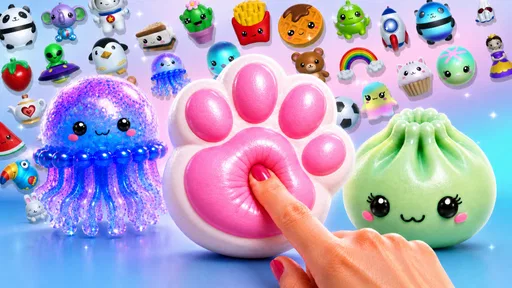

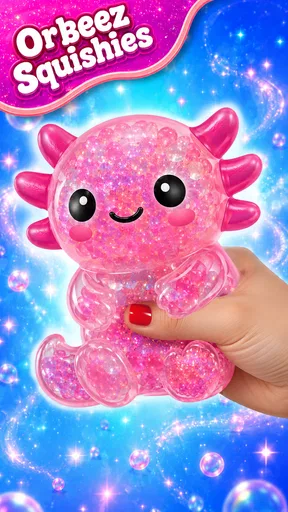

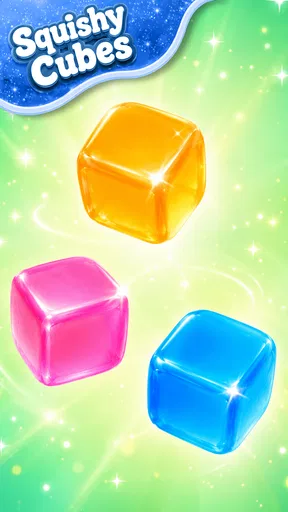



Our Review of Squishy Magic: ASMR Toy Maker
 Analysis by Appyee
Squishy Magic: ASMR Toy Maker is the kind of educational game I open when I want something gentle, tactile, and easy to understand within seconds. Its basic appeal is clear from the first interaction: I make cute three-dimensional fidget toys, add color, squeeze them, and build a collection. That sounds simple, and it is, but the simplicity is part of the charm. I never feel pushed into learning a complicated control scheme before I can enjoy the activity.
After spending time with it, I see the game less as a traditional challenge and more as a small creative routine. It gives me a sequence of satisfying actions, lets me make a visual object, and then invites me to repeat the process with another toy. The result is closer to a digital craft table than to a puzzle game with demanding goals. If you enjoy calming touch-based activities, this is an appealing free game to try. If you need deep progression, strategy, or a strong narrative, I would look elsewhere.
How the toy-making loop feels in everyday use
The opening impression is especially friendly because the game does not rely on a dramatic story or a dense menu. The focus stays on the toy itself. I can understand the intended rhythm quickly: work on the shape, give it a look, interact with its soft form, and add it to the growing collection. That directness makes it suitable for short sessions, including moments when I have only a few minutes to spare.
I also think the educational label makes sense in a broad, practical way. This is not a lesson-based title that teaches a school subject. Instead, it encourages creative choices, visual attention, hand-eye coordination, and a basic understanding of sequence. I follow a process and see how each stage changes the final object. For younger players, that structure is approachable; for adults, it works as a low-pressure sensory distraction.
The game is free to start, which removes the biggest barrier for someone who simply wants to see whether this style suits them. Optional purchases range from $0.99 to $23.99 per item, so I would recommend treating the free experience as the test before spending anything. The important question is not whether the concept is attractive—it is—but whether you personally enjoy repeating a soothing creation cycle.
In an everyday situation, I could imagine using it during a short break after work or while waiting for an appointment. I would not need to remember a plot, maintain a complicated build, or prepare for a difficult level. I can make one object, enjoy the tactile interaction, and stop. That makes the pacing more convenient than many casual games that expect me to commit to a longer round.
A welcoming starting point, with a deliberately narrow goal
The strongest early quality is clarity. The game communicates through the object on screen rather than through heavy explanations. I am not asked to master several unrelated systems at once. This is useful for children and for anyone who finds conventional games tiring, but it also reveals the central limitation: the experience has a narrow range of activity.
I would not choose it for a group of players looking for competition, cooperative play, or a shared challenge. It is also not the right alternative to a drawing app if my main goal is freeform illustration. Here, creativity is guided by the toy-making format. I can make visual decisions, but I am still working inside a carefully defined activity rather than an open canvas.
That boundary is important when deciding whether to install it. The game is best understood as a relaxing interactive toy-making session, not as a full creative studio. Once I accepted that, the repetition felt intentional rather than incomplete. The pleasure comes from the feel of the actions and the finished object, not from unlocking a complex system of mastery.
Color and shape as the game’s visual language
The art direction does most of the emotional work. Cute forms, bright colors, and rounded three-dimensional objects create a soft visual language that matches the game’s purpose. Nothing about the presentation suggests danger, urgency, or failure. Even before I interact with a toy, the appearance tells me that this is meant to be playful and undemanding.
That consistency matters. A game about squeezing and collecting would feel strange if its setting were dark, noisy, or visually aggressive. Instead, the presentation supports the central fantasy of handling a pleasant object. I find the objects easier to read because their shapes and colors are presented as the main event rather than buried beneath interface decoration.
There is also a useful connection between appearance and action. Coloring is not just a separate cosmetic screen in my mind; it helps turn the object into something that feels personally finished. The visual result gives the short sequence a sense of closure. I start with a plain or unfinished form, make choices, interact with it, and then have a completed item that belongs in the collection.
One practical tip is to pay attention to the order in which I make visual decisions. When I rush through the coloring stage, the result can feel like a task I completed rather than a toy I created. Slowing down slightly makes the process more satisfying, particularly when I am using the game as a calming activity instead of trying to move through it as quickly as possible.
Why the setting feels coherent even without a story
There is no need for a large fictional world to make this concept work. The setting is built from a repeated creative space: a place where objects are shaped, colored, squeezed, and collected. That small world has a clear internal logic. Every action belongs to the same idea, so the game does not feel like it is switching between unrelated mini-games.
This coherence is one reason I find the title more relaxing than many casual alternatives. A typical arcade game may interrupt a calm moment with countdowns, sudden obstacles, or escalating difficulty. A conventional puzzle game may ask me to concentrate on an abstract solution. Here, the object remains the anchor. The visual setting and the activity point in the same direction.
The trade-off is that the world has less room for surprise. Players who enjoy discovering characters, locations, or story details may find the environment too limited. The absence of narrative is not a flaw for the intended mood, but it does mean that the game’s long-term appeal depends heavily on how much I enjoy the tactile loop itself.
Sound, touch, and the pace of each session
The audio-visual idea behind the game is easy to understand: actions should feel pleasant, and the pace should give me room to notice them. The squeezing interaction is the central sensory moment, so the sound and animation need to reinforce the feeling of handling something soft. When those elements work together, the game creates a small pocket of calm rather than merely presenting another tap-based task.
I would describe the rhythm as unhurried. I am not constantly watching a timer or reacting to an opponent. That gives the experience a useful quality for winding down, especially after a busy day. The pacing also makes it accessible to players who do not usually enjoy fast mobile games. I can focus on one action at a time and decide when a toy feels finished.
Still, the same relaxed rhythm can feel slow if I am looking for immediate variety. The game does not provide the adrenaline of an endless runner or the sharp satisfaction of a difficult match-three board. Its sound and pacing are designed to support repetition, so players who need constant novelty may lose interest sooner than players who enjoy sensory routines.
A realistic way to use it is as a short reset between demanding tasks. I might play without trying to maximize progress, simply following the creation sequence and letting the repeated actions occupy my attention. That is different from using a competitive game as a distraction: the goal here is not to win quickly, but to settle into a predictable rhythm.
How the mechanics support the mood
The mechanics fit the art direction because they remain focused on transformation and touch. Creating gives me a reason to engage, coloring gives me a personal choice, squeezing supplies the tactile payoff, and collecting gives the session a sense of continuation. None of these parts feels like it belongs to a different genre. Together, they form a compact loop that is easy to repeat.
That loop also explains why the game can be appealing to different ages. The Everyone content rating reflects its approachable presentation, and I can see why a family might consider it suitable for a broad audience. A younger player can enjoy the colors and shapes, while an older player may use the repetitive interaction as a quiet break. The game does not require advanced gaming knowledge to make its basic appeal understood.
At the same time, I would keep expectations realistic about educational depth. It supports creativity and sensory engagement, but it should not replace a dedicated art-learning app, a structured educational course, or a physical activity designed for therapeutic purposes. Its educational value comes from playful making and controlled interaction, not from a formal curriculum.
One of the more useful ways to approach the mechanics is to treat each toy as a small project rather than as a disposable step toward the next item. I can make a deliberate color choice, take time with the tactile part, and then look at the collection as a record of those choices. This approach makes the game feel more rewarding than tapping through every stage with the sole aim of reaching the end.
The collection element helps, but it is not enough on its own to create deep progression for me. I enjoy having finished items gathered together, yet I would not expect the same strategic satisfaction I get from games built around upgrades, resource planning, or difficult goals. The collection is a reason to continue, not a substitute for a complex progression system.
What the developer delivers in the current version
Dramaton has kept the concept recognizable: a free educational game centered on cute sensory objects and straightforward creative interaction. The current version is 7.31, and the game supports devices running Android 7.0 or later. Those details matter if I am installing it on an older phone, because compatibility can decide whether a pleasant casual game is practical for everyday use.
The game’s popularity is substantial, with an average rating of 4.6 from around 131 thousand ratings and over 10 million installs. Those figures suggest that the basic idea connects with a large audience, although popularity does not guarantee that every player will enjoy the repetition. I would read the strong response as evidence that the presentation and simple sensory loop work well for many people, not as proof that it offers the depth of a larger game.
There are around 14 thousand written reviews, which also tells me that players have found the experience worth discussing beyond a quick download. Even so, I would approach in-app purchases carefully. Optional items can make sense for someone who has already spent enough time with the free content to know what they want, but buying immediately would be difficult for me to justify in a game whose main loop is intentionally compact.
A useful household habit is to decide in advance whether the game is being used as a child-friendly creative toy or as an adult relaxation app. That choice helps set reasonable expectations. For a child, I would focus on the making activity and supervise purchasing decisions. For myself, I would use it in short sessions and stop when the soothing repetition turns into mindless tapping.
Who should choose it, and who should skip it
I would recommend this game to players who like colorful 3D objects, gentle sensory interactions, and creative activities with a clear beginning and end. It is a particularly good fit for someone who wants a low-pressure mobile experience rather than another demanding challenge. Families looking for an approachable game with an Everyone age rating may also find the presentation comfortable.
I would be more cautious about recommending it to players who want a story, competitive goals, complex puzzles, or a large world to explore. It is also not my first choice when I want a serious drawing tool, because the creative space is shaped around making and collecting toys. A dedicated art app is better for open-ended illustration, while a puzzle game is better for mental challenge and measurable improvement.
The most important trade-off is variety versus calm. The focused design helps the mood remain consistent, but it can also make the experience feel repetitive. If I am already bored by simple touch interactions, no amount of cute presentation will completely solve that problem. On the other hand, if I enjoy familiar actions that help me slow down, the limited scope becomes a strength.
My verdict on the atmosphere and the lasting appeal
The best reason to play is the way every part of the experience supports the same gentle mood. The rounded art, toy-focused setting, tactile actions, and unhurried rhythm are not separate decorations; they work together. I always know what kind of experience the game wants to provide, and it rarely fights against that goal with unnecessary pressure.
I also appreciate that it is easy to recommend without pretending it is something larger than it is. This is not a deep simulation of toy design or a demanding educational course. It is a polished-feeling sensory activity built around making, coloring, squeezing, and collecting. That honesty helps me decide when to play it: during a short break, as a quiet option for a younger player, or whenever I want a simple creative routine.
My main reservation is longevity. Once the novelty of the objects and interactions fades, players who need new systems may move on. The optional purchases are another reason to stay measured; I would enjoy the free experience first and only consider spending if the game becomes a regular part of my routine.
Overall, I think Squishy Magic: ASMR Toy Maker succeeds because it understands its own scale. It does not overload a small sensory idea with unnecessary complexity. For me, that makes it a pleasant choice when I want a colorful, touch-driven pause rather than a conventional game challenge. I would install it for relaxation and casual creativity, while choosing a drawing, puzzle, or story game whenever I need more depth.
Verdict
Strengths of Squishy Magic: ASMR Toy Maker
- Satisfying ASMR sounds make crafting sessions relaxing.
- Simple controls are suitable for children and casual players.
- Many toy designs encourage experimentation and creativity.
- Short activities work well for quick, low-commitment play.
- Bright visuals and playful animations are appealing and cheerful.
Limitations of Squishy Magic: ASMR Toy Maker
- Gameplay can become repetitive after unlocking the main toy types.
- Some items or features may require watching ads or making purchases.
- Frequent advertisements can interrupt the relaxing crafting flow.
- The game offers limited challenge for players seeking deeper mechanics.
- Sound effects may feel irritating rather than relaxing for some users.
Other Releases by Dramaton
View All
Super Slime Simulator: DIY Art
Lifestyle4.5
Similar Picks in This Category
View All
Little Panda Policeman
BabyBus4.0

Monster Trucks Game for Kids 2
Raz Games4.1

Little Panda's Chinese Recipes
BabyBus4.4

Little Panda's Restaurant
BabyBus4.4

Little Panda's Ice Cream Games
BabyBus4.3

Baby Panda Care
BabyBus3.8
Frequently Asked Questions
What is Squishy Magic: ASMR Toy Maker?
Squishy Magic: ASMR Toy Maker is a relaxing crafting and simulation game centered on creating soft, colorful squishy toys. You typically shape, decorate, and customize virtual toys while enjoying satisfying visual and sound effects. Its simple controls make it accessible for casual players, although the experience is primarily designed for short, relaxing sessions rather than a complex story or competitive gameplay.
How do you play Squishy Magic: ASMR Toy Maker?
Gameplay focuses on completing a series of hands-on toy-making steps. You may choose a shape, apply colors or decorations, and interact with the squishy object through tapping, dragging, pressing, or other touch gestures. Each completed creation can unlock additional designs or customization options. The mechanics are easy to understand, so the game does not require previous experience with crafting or simulation titles.
Is Squishy Magic: ASMR Toy Maker free to download?
The game is generally available as a free download, but availability, pricing, and included features can vary depending on whether you use Android or iOS and which region your store account belongs to. Free access may be supported by advertisements, while some items, upgrades, or optional features can require in-app purchases. It is worth checking the store listing before downloading.
Does the game require an internet connection?
Some parts of Squishy Magic: ASMR Toy Maker may work without a constant internet connection, particularly the basic crafting activities already installed on your device. However, advertisements, purchases, updates, cloud-related features, or newly downloaded content may require internet access. If you plan to play offline, test the game after disabling connectivity because functionality can differ between versions and devices.
Is Squishy Magic: ASMR Toy Maker suitable for children?
The game uses simple, non-violent crafting gameplay and may be appropriate for children who enjoy colorful creative activities. Nevertheless, parents should review the age rating, advertising practices, and in-app purchase settings before allowing unsupervised play. Depending on the version, children may encounter optional purchases or third-party advertisements, so parental controls are recommended to prevent accidental spending or unsuitable content.
Play our best games!


